
Why Elevating the Toy Can Transform Your Grid Work
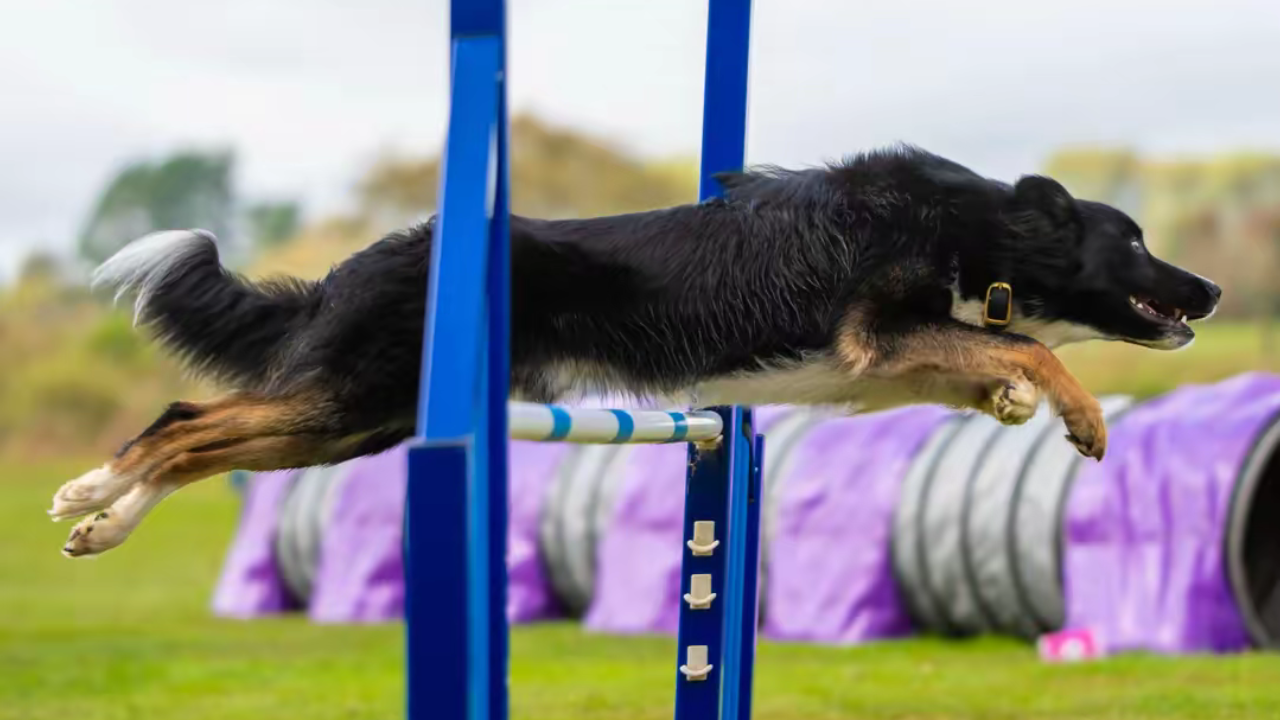
Why elevate the toy off the ground?
It was a great question—and one that gets to the heart of why grids are such a powerful training tool when set up thoughtfully.
A small detail like where you place your reward can have a big impact on how your dog moves, learns, and develops strength and technique. In particular, elevating the toy (rather than placing it on the ground) can make a significant difference to the quality of your dog’s jumping.
Let’s break down why.
Encouraging Better Posture and Shape
When a toy is placed on the ground, many dogs naturally drop their head and flatten their topline as they move through the grid. This often leads to a “downward” jumping effort, where the dog is thinking about grabbing the reward rather than completing the jump with good form.
By elevating the toy, you lift the dog’s focus. Their head and eyes stay forward and slightly up, which helps promote a more rounded shape over the jump (a better bascule). This allows them to engage their back and core more effectively.
The result: cleaner, more efficient jumping technique and better long-term biomechanics.
Building Forward Power
Ground-level rewards can unintentionally encourage dogs to shorten their stride on the final approach or even “dive” toward the reward. This reduces power and can create inefficient movement patterns.
An elevated toy changes that picture. Instead of thinking down, the dog drives forward through the line. They learn to push off the ground and extend over the last jump, maintaining energy all the way through.
The result: stronger, more committed jumping with better follow-through.
Maintaining Rhythm Through the Grid
One of the key goals of grid work is rhythm—consistent, controlled strides between obstacles. When a reward sits low on the ground, some dogs begin to anticipate it too early, leading to hesitation, stuttering strides, or loss of flow into the final jump.
Raising the toy helps keep the dog’s focus ahead and through the line, rather than pulling them down or shortening their stride prematurely.
The result: smoother, more confident movement and better consistency.
Supporting Safe Movement
Another often-overlooked benefit is safety. Ground rewards can encourage dogs to scramble, slide, or land heavily on their front end as they rush toward the toy.
By contrast, an elevated reward promotes a more balanced landing and encourages the dog to stay organised and light on their feet. This is especially important when working strength or conditioning grids.
The result: safer movement patterns and reduced strain on the dog’s body.
Keeping the Focus on What Matters
It’s important to remember the purpose of grid work:
- It’s not about the reward
- It’s about how your dog uses their body
The way you present the reward should support the picture you’re trying to build—not distract from it or accidentally reinforce poor habits.
Elevating the toy helps align the reward with your training goal, encouraging the movement and technique you want to see.
A Simple Rule to Remember
- Low toy = lowers posture and power
- Elevated toy = lifts posture, power, and technique
Small adjustments like this can have a big impact over time. If you’re working on improving your dog’s jumping mechanics, it’s well worth paying attention to not just what you’re rewarding—but how you’re presenting that reward.
